798 Art Zone
Beijing’s flagship contemporary art district, housed in decommissioned Bauhaus-style military factory buildings from the 1950s. Gallery-hop along the tree-lined 798 Street for cutting-edge exhibits, street art murals, design shops, and café culture that define modern Beijing.
Why It’s Worth Visiting
798 Art Zone is where contemporary China actually happens — a vast former factory complex turned into Beijing's contemporary art heart, with murals, sculpture, and world-class institutions like UCCA all free to wander. It is the essential counterweight to the imperial sights.
After days of palaces and temples, 798 shows you the China of today: its artists, designers, and cafe culture, in one of the most photographed creative districts in Asia. It is free, easy, and the best half-day introduction to where Chinese art is going.
What to Expect
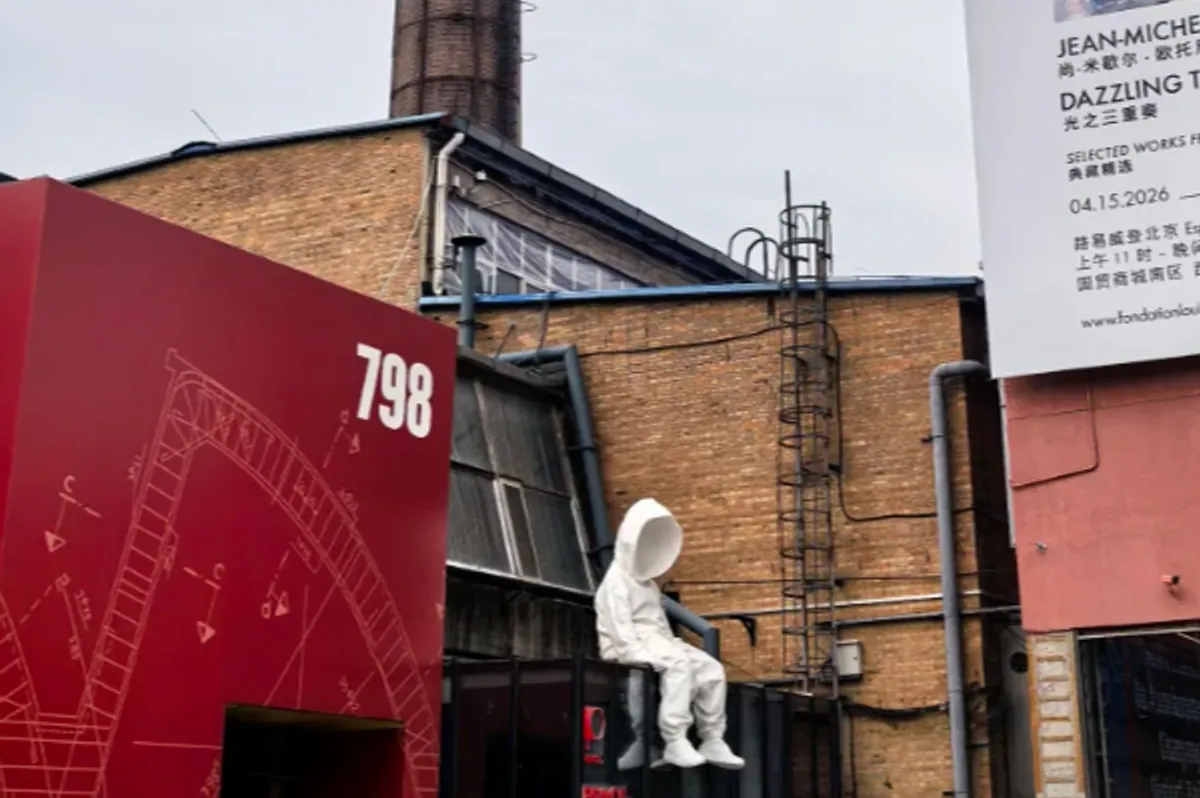
798 Art Zone is Beijing's contemporary art heart — a former military electronics factory complex from the 1950s repurposed into a sprawling district of galleries, studios, design shops, and cafes. The Bauhaus-style concrete architecture (high ceilings, huge factory windows, exposed beams) is itself the first exhibit; the district's scale — over 500,000 square meters — takes a full afternoon to even sample.
The galleries range from established institutions like UCCA Center for Contemporary Art, which mounts some of China's most important exhibitions, to tiny single-room spaces that change their shows every few weeks. Between the galleries, the streets are an open-air museum: political pop-art murals, monumental sculptures, and rusted factory machinery preserved as installation. This is where Beijing's art scene visibly lives, not just hangs.
Beyond the art, 798 has matured into a lifestyle district — design bookstores, vinyl shops, studios where you can watch ceramicists and printmakers at work, and cafes where gallery-hopping crowds refuel. It is genuinely free to wander; only the special exhibitions charge entry.
The setting is historically layered. The factory complex was built in 1957 by East German architects for the state electronics industry; its Bauhaus-influenced halls were among the largest such structures in Asia. When the factories closed in the 1990s, artists moved in from around 2000, and the district became China's first state-endorsed contemporary art zone — the template for creative districts from Shanghai's M50 to Beijing's own 751.
Come without a rigid itinerary. The pleasure of 798 is in the drift: follow a mural, duck into a gallery that catches your eye, and let the district reveal itself. Two to three hours is the minimum; four if you add a special exhibition and a long lunch.
The mural wall on 798 East Street between 3rd and 4th Main Alley — a rotating outdoor gallery of politically charged Chinese street art. Early morning light (8–10am) is soft and shadow-free.
| Ticket Price | Free entry |
| Duration | 2-3 hours |
| Nearest Subway | Wangjingnan (Line 10/Dongcheng Line), Exit A |
| Best Season | Year-round |
| Best For | Adults and active travelers |
Must-See Highlights
- Bauhaus factory architecture
- UCCA Center for Contemporary Art
- 798 Space gallery
- Street art murals
- Design boutiques & café
How to Get There
Take Line 10/Dongcheng Line to Wangjingnan station (Exit A). The attraction entrance is a short walk from the station.
Beijing subway operates from approximately 5am to 11pm daily. Fares range from CNY 3 to 9. English signage and announcements are available on all lines.
How to Spend Your Time
- 1
Take Line 10 to Wangjingnan, then a 10-minute walk or taxi to the south gate.
- 2
Start at the 798 Main Street for the street-art murals before the galleries fill up.
- 3
Visit UCCA or 798 Space for a major exhibition — book special shows online in advance.
- 4
Finish in the sculpture-garden cafe strip as the light turns to golden hour.
Insider\u2019s Tip
Enter at the 798 Middle Street gate rather than the main entrance — you’ll hit UCCA and 798 Space first before the guided-tour crowds from the south gate arrive at 11am. Many galleries open at 10am; plan 30 minutes per gallery and take breaks at the sculpture garden café.
A Bit of History
The '798' name comes from the original factory floor number. Built in 1957 by Soviet planners, the Bauhaus-influenced concrete structures were repurposed into artist studios starting in 2000. It became China's first state-endorsed contemporary art district and the prototype for Shanghai's M50 and other creative zones.
Beat the Crowds
Tuesdays and Wednesdays are quiet. Weekends draw families, so it no longer feels exclusively like an artist haunt, especially after 2pm. December–January sees pop-up markets; March—May brings major exhibitions.
Where to Eat Nearby
Within the zone, Restaurant 798 (inside 798-XU Museum) does elevated Chinese fusion. Just 10 minutes north, Huangchao Road's Hunan Road snack street is stacked with Beijing-roast-duck and skew-yakitori joints after 6pm.
Best Photo Spot
The mural wall on 798 East Street between 3rd and 4th Main Alley — a rotating outdoor gallery of politically charged Chinese street art. Early morning light (8–10am) is soft and shadow-free.
Good to Know
- Free to enter; most galleries are free, with special exhibitions typically CNY 50-100.
- Most galleries open 10am-6pm and close Mondays — check individual schedules.
- Weekdays are quiet; weekends draw families and street performers.
- Combine with the nearby 751 D-Park design district for a full creative-zone day.
- Wear comfortable shoes — the district is huge and laid out along long factory roads.
798 Art Zone: Frequently Asked Questions
Is 798 Art Zone free?
Yes — wandering the district and most galleries is free. Only special exhibitions (UCCA, 798 Space, and others) charge, typically CNY 50-100. Check each show's page before you go.
How do I get to 798?
The simplest route is Line 10 to Wangjingnan station, then a 10-minute walk or short taxi. Several bus lines also stop near the main gates. Expect 40-60 minutes from central Beijing.
How long should I spend at 798?
Two to three hours covers the murals and a handful of galleries. Add a special exhibition and a meal, and it becomes a full afternoon.
Is 798 family-friendly?
Yes — it is an easy, stroller-friendly district with wide roads, outdoor sculpture, and plenty of cafes. The street art and factory machinery fascinate older kids, though some exhibition content is adult-themed.