Great Wall at Mutianyu
A beautifully restored Great Wall section with lush forest surroundings and significantly fewer crowds than Badaling. Features 23 watchtowers, cable car access, and a unique toboggan slide down. Perfect for families and photographers.
Why It’s Worth Visiting
Mutianyu is the Great Wall experience most people imagine but rarely find: the Wall winding through forest, watchtowers close enough to make the walk a series of satisfying mini-destinations, and genuine quiet stretches even at peak season.
Add the toboggan slide — a 1,580-meter ride down through the treeline that has no equivalent on any other section — and Mutianyu turns a once-in-a-lifetime monument into an afternoon people still talk about years later. For families especially, it is the friendliest Great Wall there is.
What to Expect
Mutianyu is the Great Wall for people who want the grandeur without the theme-park atmosphere. The Wall here runs through dense forest that erupts into gold and crimson every October, and the 23 closely-spaced watchtowers create a rhythm of climb, rest, view — far more forgiving than Badaling's long, unbroken ascents.
The standard route is the loop: cable car or chairlift up to Tower 14, walk west toward Tower 1 (or east from Tower 19 if you ride the other lift), then the toboggan or chairlift down. Tower 14 to Tower 19 is the gentlest, best-viewed section, and even on a busy Saturday you will find stretches where it is just you and the wall disappearing into the treeline.
The toboggan slide is the experience that separates Mutianyu from every other section. A 1,580-meter steel chute through the forest, it is faster than you expect and grins you all the way down. Kids ride tandem with parents; adults of all ages queue for a second go.
History buffs get a bonus here: Mutianyu predates Badaling. The original wall was built in the Northern Qi Dynasty (550-577 CE) and reinforced by Ming general Xu Da in 1368. Because it guarded the imperial Ming tombs to the south, the watchtowers were built unusually dense — 23 towers over just 2.25 kilometers — and several retain original battlements and the arrow-slit windows that later restorations elsewhere smoothed away.
Getting to Mutianyu is slightly more effort than Badaling — it is why the crowds stay moderate. The reward is a wall that feels more like a hike and less like a sightseeing ride: quieter ramps, forest-framed views, and that toboggan finish that makes the trip memorable for every age.
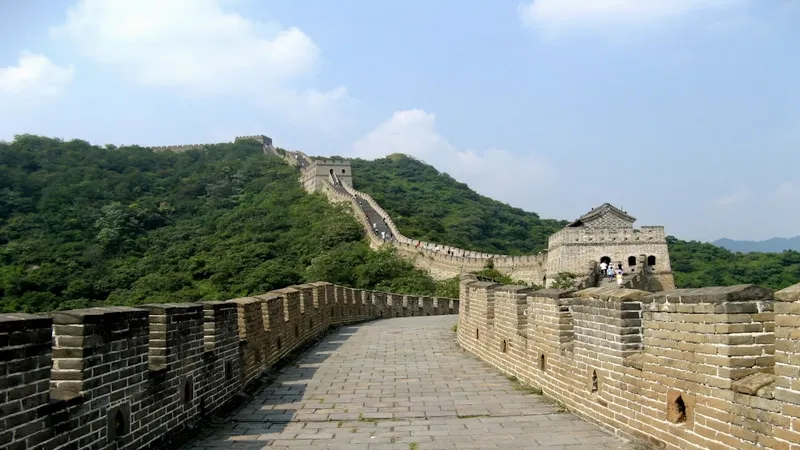
From the path between Tower 13 and Tower 14 looking back east — the Wall descends through a forest canopy. In autumn, the mix of green pines and golden deciduous trees makes this the most photogenic Wall section.
| Ticket Price | CNY 40 – CNY 45 |
| Duration | 4-5 hours |
| Nearest Subway | Dongzhimen (Bus) (Bus 916 Express) |
| Best Season | Spring, Autumn |
| Best For | All visitors, including families |
Must-See Highlights
- Toboggan slide
- Cable car
- 23 watchtowers
- Fewer crowds
How to Get There
Take Bus 916 Express to Dongzhimen (Bus) station. The attraction entrance is a short walk from the station.
Beijing subway operates from approximately 5am to 11pm daily. Fares range from CNY 3 to 9. English signage and announcements are available on all lines.
How to Spend Your Time
- 1
Bus 916 Express to Huairou, then a local taxi to the entrance gate (90-120 minutes total).
- 2
Cable car up to Tower 14 and walk east toward Tower 19 for the gentlest ridge line.
- 3
Turn back at Tower 19 and descend by toboggan from Tower 6 if you walk the full length.
- 4
Finish with lunch at a farmhouse restaurant before the 2pm bus departure.
Insider\u2019s Tip
Take the cable car up, walk westward toward Tower 14, then take the toboggan slide down from Tower 6 — a 1,580-meter metal track through the forest. Kids as young as 5 can ride tandem with a parent.
A Bit of History
Mutianyu predates Badaling — first built during the Northern Qi Dynasty (550-577 CE) and later reinforced under the Ming Dynasty in 1368. The watchtowers are unusually dense (23 towers over just 2.25km) because Mutianyu guarded the imperial tombs.
Beat the Crowds
Tuesday to Thursday is the sweet spot. Late October to early November is peak foliage window — the surrounding forest turns gold and crimson.
Where to Eat Nearby
The Brickyard, a restored village schoolhouse turned eco-retreat 10 minutes from the entrance, serves farm-to-table Chinese and Western food with a view of the Wall on the ridgeline.
Best Photo Spot
From the path between Tower 13 and Tower 14 looking back east — the Wall descends through a forest canopy. In autumn, the mix of green pines and golden deciduous trees makes this the most photogenic Wall section.
Good to Know
- Combined entrance + cable car + toboggan runs about CNY 180 per adult.
- The wall here is 2.25km with 23 towers — a full exploration takes 4-5 hours.
- Autumn (late Oct to early Nov) is peak foliage; book the day's entry online.
- There are no restaurants on the wall — the farmhouse village at the base is the spot to eat.
- Chairlift up + toboggan down is the most popular combo; the cable car is better in rain or wind.
Great Wall at Mutianyu: Frequently Asked Questions
Mutianyu or Badaling — which should I pick?
Mutianyu for families, photographers, and anyone who dislikes crowds — it has gentler slopes, forest views, and the toboggan. Badaling for the classic postcard scene, easiest transport, and the S2 train. See our full Badaling vs Mutianyu comparison.
How do I get to Mutianyu by public transport?
Take Bus 916 Express from Dongzhimen to Huairou (about 1 hour), then a local taxi the last 20 minutes to the gate. Private cars and hotel shuttles run about CNY 600-800 round trip.
How long should I allow for Mutianyu?
A full day, door to door. On the wall itself, the loop (cable car up, walk, toboggan down) takes 3-4 hours; lingering on the towers and adding a farmhouse lunch easily extends it.
Is the toboggan slide safe for kids?
Yes — children ride tandem with a parent, and the sled has simple brake levers. Minimum solo-rider age is around 12; younger kids pair with an adult. It is one of the most family-friendly things on the Great Wall.